Paulina Troncoso-Escudero
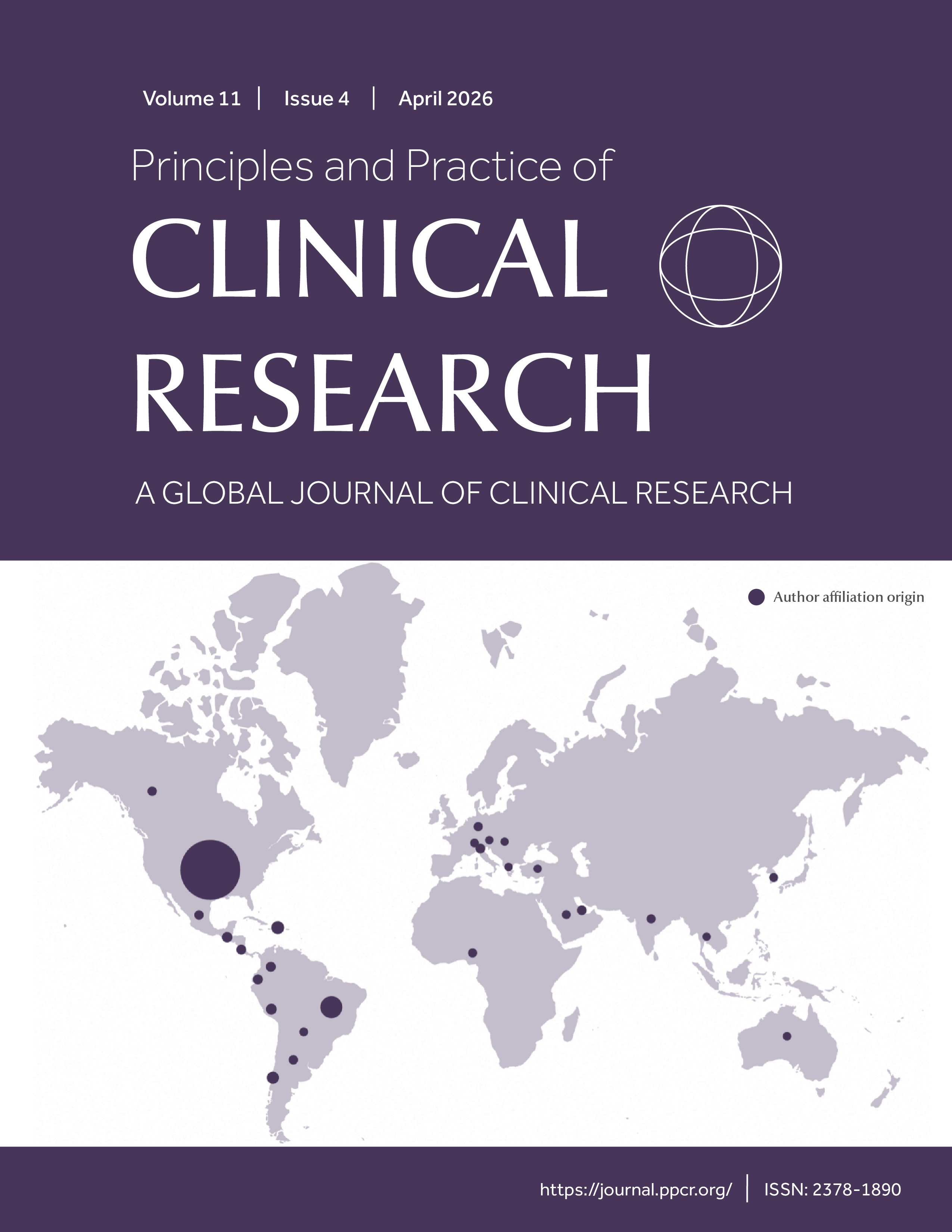
Principles and Practice in Clinical Research Program, Harvard T.H. Chan School of Public Health, Boston, MA, USA; Laboratorio de Diagnóstico Molecular y Biomarcadores, Facultad de Medicina, Clínica Alemana, Universidad del Desarrollo, Chile
Marion Erica Feddersen Welkner
Principles and Practice in Clinical Research Program, Harvard T.H. Chan School of Public Health, Boston, MA, USA; Clínica Alemana de Santiago, Chile
Jae Kyung Jo
Principles and Practice in Clinical Research Program, Harvard T.H. Chan School of Public Health, Boston, MA, USA; Blue Hill Medical Foundation, Suwon, Republic of Korea
Daniela Vicinansa Monaco Ferreira
Principles and Practice in Clinical Research Program, Harvard T.H. Chan School of Public Health, Boston, MA, USA; Faculdade São Leopoldo Mandic, Instituto de Pesquisa São Leopoldo Mandic, Campinas, Brazil
Karla Andrade Ruiz
Principles and Practice in Clinical Research Program, Harvard T.H. Chan School of Public Health, Boston, MA, USA; Universidad San Francisco de Quito, Hospital Metropolitano de Quito, Ecuador
Fernando Jose Gomez Juarez
Principles and Practice in Clinical Research Program, Harvard T.H. Chan School of Public Health, Boston, MA, USA; Universidad Francisco Marroquín, Guatemala City, Guatemala
Natália Puschnick Gimenez
Principles and Practice in Clinical Research Program, Harvard T.H. Chan School of Public Health, Boston, MA, USA; Faculdade São Leopoldo Mandic, Campinas, Brazil
Jorgelina Stegmann
Principles and Practice in Clinical Research Program, Harvard T.H. Chan School of Public Health, Boston, MA, USA; Department of Research, Fundación SPINE, Buenos Aires, Argentina
Henrique Balseiro Zin
Principles and Practice in Clinical Research Program, Harvard T.H. Chan School of Public Health, Boston, MA, USA; Faculdade de Medicina da Universidade de São Paulo, Brazil
Alice Campanholo de Oliveira
Principles and Practice in Clinical Research Program, Harvard T.H. Chan School of Public Health, Boston, MA, USA; Faculdade São Leopoldo Mandic, Campinas, Brazil
Yulissa Hernández Frías
Principles and Practice in Clinical Research Program, Harvard T.H. Chan School of Public Health, Boston, MA, USA; Centro de Diagnóstico Medicina Avanzada y Telemedicina (CEDIMAT), Santo Domingo, Dominican Republic
Lissa Raquel Sandoval Castillo
Principles and Practice in Clinical Research Program, Harvard T.H. Chan School of Public Health, Boston, MA, USA; Universidad Francisco Marroquín, Guatemala City, Guatemala
Miray Nilufer Cimsit Kemahli
Principles and Practice in Clinical Research Program, Harvard T.H. Chan School of Public Health, Boston, MA, USA
Priscila Sales Barroso
Principles and Practice in Clinical Research Program, Harvard T.H. Chan School of Public Health, Boston, MA, USA; Eli Lilly do Brasil, São Paulo, Brazil
Diego Perez Paez
Principles and Practice in Clinical Research Program, Harvard T.H. Chan School of Public Health, Boston, MA, USA; Clínica Dávila, Santiago, Chile
Letícia Cabreira dos Santos
Principles and Practice in Clinical Research Program, Harvard T.H. Chan School of Public Health, Boston, MA, USA; Faculdade São Leopoldo Mandic, Campinas, Brazil
Hanna Bennewart
Principles and Practice in Clinical Research Program, Harvard T.H. Chan School of Public Health, Boston, MA, USA; Dresden International University, Germany
Laura Amaral de Lara Resende
Principles and Practice in Clinical Research Program, Harvard T.H. Chan School of Public Health, Boston, MA, USA; Virtu Oftalmologia, Belo Horizonte, Brazil
Siddiha Poovelil Shahulhameed
Principles and Practice in Clinical Research Program, Harvard T.H. Chan School of Public Health, Boston, MA, USA; Hamad Medical Corporation, Doha, Qatar
Fernando Espinoza
Principles and Practice in Clinical Research Program, Harvard T.H. Chan School of Public Health, Boston, MA, USA
Paula Aranguren
Principles and Practice in Clinical Research Program, Harvard T.H. Chan School of Public Health, Boston, MA, USA; Beth Israel Deaconess Medical Center, Boston, MA, USA
Paula Bertagnoli
Principles and Practice in Clinical Research Program, Harvard T.H. Chan School of Public Health, Boston, MA, USA; Faculdade São Leopoldo Mandic, Campinas, Brazil
Sarah Burgos
Principles and Practice in Clinical Research Program, Harvard T.H. Chan School of Public Health, Boston, MA, USA; Two Oceans in Health, Santo Domingo, Dominican Republic
Ala Hassan
Principles and Practice in Clinical Research Program, Harvard T.H. Chan School of Public Health, Boston, MA, USA; Hamad Medical Corporation, Doha, Qatar
Nikolaos Paschos
Principles and Practice in Clinical Research Program, Harvard T.H. Chan School of Public Health, Boston, MA, USA
Carlos Roa
Principles and Practice in Clinical Research Program, Harvard T.H. Chan School of Public Health, Boston, MA, USA; Centro de Diagnóstico Medicina Avanzada y Telemedicina (CEDIMAT), Santo Domingo, Dominican Republic
Roy Rosado
Principles and Practice in Clinical Research Program, Harvard T.H. Chan School of Public Health, Boston, MA, USA; Universidad Francisco Marroquín, Guatemala City, Guatemala
Abstract
Background: Caffeine is widely consumed for its potential cognitive-enhancing effects, yet findings across cognitive domains and dosing regimens remain heterogeneous.
Objectives: This systematic review aimed to evaluate the effects of low (100-200 mg) and high (300-400 mg) doses of caffeine on cognitive performance, specifically attention, memory, and executive function in healthy adults aged 18-60 years, compared to placebo.
Methods: We included randomized controlled trials (RCTs) that evaluated the effects of low-dose (100-200 mg) or high-dose (300-400 mg) caffeine on cognitive performance in healthy adults (aged 18-60 years). These studies assessed cognitive domains such as attention, memory, or executive function using standardized cognitive tests. Studies were excluded if they involved pediatric (<18 years) or elderly populations (>60 years), individuals with cognitive impairments, or if they assessed non-cognitive outcomes. Databases searched included PubMed, Embase, Scopus, and Web of Science, from 2015 until 2025. Risk of bias in the included studies was assessed using Cochrane Risk-of-Bias (RoB2-tool). Data extraction and analysis were performed using Covidence.
Results: Twenty RCTs (n = 951; ages 18–60) were included. Low-to-moderate caffeine doses (100–200 mg) consistently improved sustained attention, vigilance, and reaction time, with stronger effects observed in low habitual consumers. Working memory showed overall improvement, though findings varied by task and baseline caffeine intake. Executive function outcomes were heterogeneous, with task-specific benefits but no consistent pattern. Mood and arousal frequently improved, while higher doses (≥300 mg) produced null or inconsistent effects. Importantly, although studies evaluated varying caffeine doses, none directly compared low versus high doses within the same experimental design, precluding firm conclusions regarding dose–response superiority. Risk of bias was mostly moderate, reflecting issues with blinding and outcome reporting.
Conclusions: Caffeine appears to exert domain-specific cognitive effects in healthy adults, with more consistent benefits observed in attention-related measures than in executive function. The absence of direct low–high dose comparisons limits conclusions regarding optimal dosing; though trials with low dose seem to produce larger effects. Future trials should directly compare dosing strategies and comprehensively assess multiple cognitive domains to clarify potential tradeoffs between attentional enhancement and executive performance.