Alanna Michel Zorrilla Marte
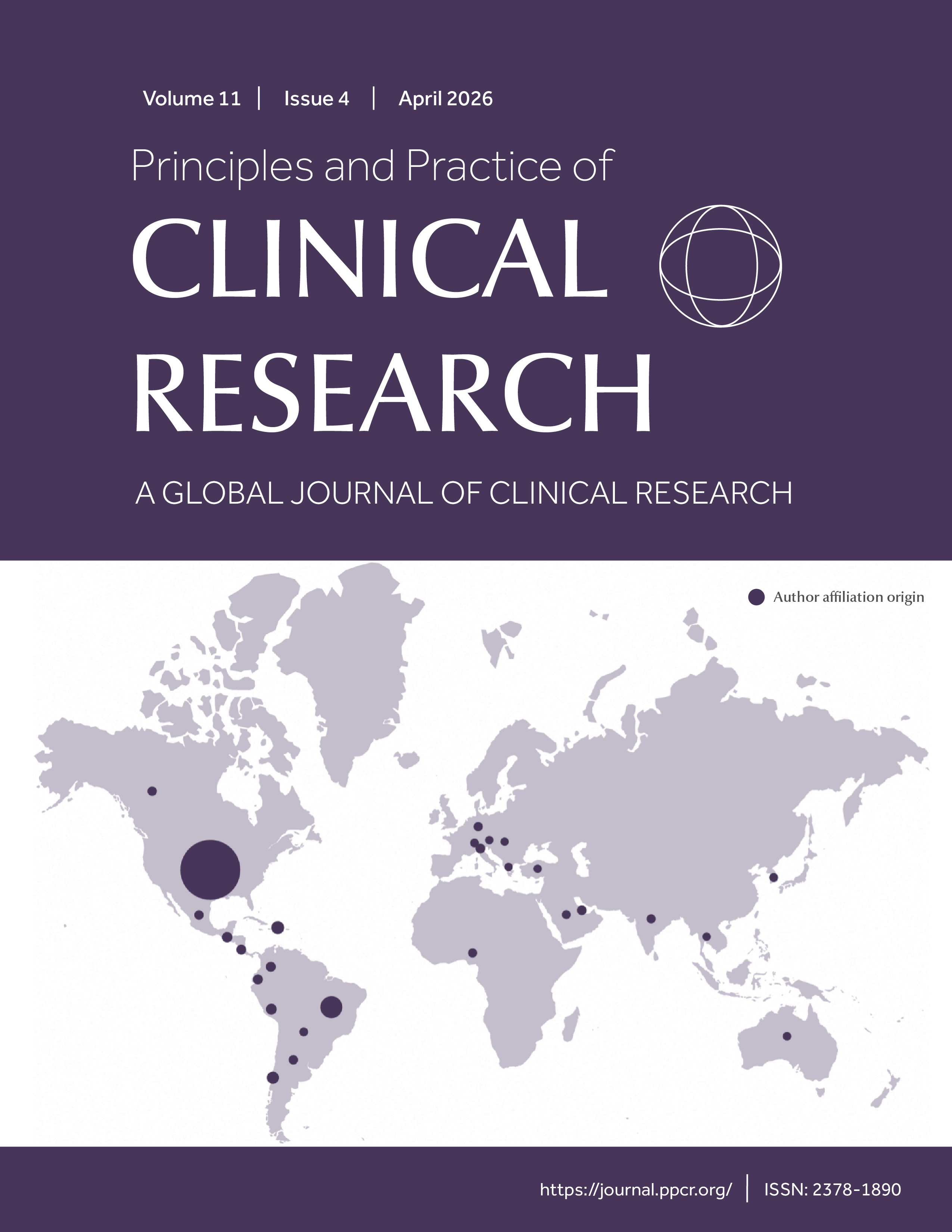
Principles and Practice in Clinical Research Program, Harvard T.H. Chan School of Public Health, Boston, MA, USA; Universidad Nacional Pedro Henriquez Ureña (UNPHU), Dominican Republic
Angela Quinche
Principles and Practice in Clinical Research Program, Harvard T.H. Chan School of Public Health, Boston, MA, USA; University of El Rosario, Bogotá, Colombia
Gabrielle Sigaki
Principles and Practice in Clinical Research Program, Harvard T.H. Chan School of Public Health, Boston, MA, USA; Faculty of Medicine (FMUSP), University of São Paulo, São Paulo, Brazil
Giulia Soares
Principles and Practice in Clinical Research Program, Harvard T.H. Chan School of Public Health, Boston, MA, USA; Einstein Hospital Israelita, São Paulo, Brazil
Josefina Maria Bran
Principles and Practice in Clinical Research Program, Harvard T.H. Chan School of Public Health, Boston, MA, USA; Austral University Hospital, Buenos Aires, Argentina
Nathalia Serrato
Principles and Practice in Clinical Research Program, Harvard T.H. Chan School of Public Health, Boston, MA, USA; Instituto D’Or de Pesquisa e Ensino (IDOR), DF Star Hospital, Brasília, Brazil
Aarti Garg
Principles and Practice in Clinical Research Program, Harvard T.H. Chan School of Public Health, Boston, MA, USA; University of Regina, Saskatchewan, Canada
Anushka Verma
Principles and Practice in Clinical Research Program, Harvard T.H. Chan School of Public Health, Boston, MA, USA; Smt. N.H.L. Municipal Medical College, India
Arthur de Ávila
Principles and Practice in Clinical Research Program, Harvard T.H. Chan School of Public Health, Boston, MA, USA; Cancer Institute of the State of São Paulo, University of São Paulo, São Paulo, Brazil
Arthur Braga
Principles and Practice in Clinical Research Program, Harvard T.H. Chan School of Public Health, Boston, MA, USA; A.C.Camargo Cancer Center, São Paulo, Brazil
Brian Villafuerte-Trisolini
Principles and Practice in Clinical Research Program, Harvard T.H. Chan School of Public Health, Boston, MA, USA; Design Neuroscience Center, Larkin Community Hospital Neurology Residency Program, HCA Kendall Hospital Residency Program, Florida, USA
Drumadala Gajbhiye
Principles and Practice in Clinical Research Program, Harvard T.H. Chan School of Public Health, Boston, MA, USA; Government Medical College & Hospital, Akola, India
Elif Kortan
Principles and Practice in Clinical Research Program, Harvard T.H. Chan School of Public Health, Boston, MA, USA
Enkhtuul Iderjavkhlan
Principles and Practice in Clinical Research Program, Harvard T.H. Chan School of Public Health, Boston, MA, USA; Macquarie University, Australia
Fernanda Mishelly Yánez Llerena
Principles and Practice in Clinical Research Program, Harvard T.H. Chan School of Public Health, Boston, MA, USA; University of Guayaquil, Ecuador
Lucas Caro Herrera
Principles and Practice in Clinical Research Program, Harvard T.H. Chan School of Public Health, Boston, MA, USA; Clínica Dávila, Santiago, Chile
Manuela Neira
Principles and Practice in Clinical Research Program, Harvard T.H. Chan School of Public Health, Boston, MA, USA; Beth Israel Deaconess Medical Center, Boston, MA, USA
Maria Guadalupe Gomez-Castano
Principles and Practice in Clinical Research Program, Harvard T.H. Chan School of Public Health, Boston, MA, USA; University of El Rosario, Bogotá, Colombia
Nicole Schleicher
Principles and Practice in Clinical Research Program, Harvard T.H. Chan School of Public Health, Boston, MA, USA; Klinikum Chemnitz, Germany
Pedro Jara-Guajardo
Principles and Practice in Clinical Research Program, Harvard T.H. Chan School of Public Health, Boston, MA, USA; Clínica Alemana de Santiago, Chile
Pedro Henrique Faria
Principles and Practice in Clinical Research Program, Harvard T.H. Chan School of Public Health, Boston, MA, USA; Boston Children’s Hospital, Boston, MA, USA
Renzo Villagra
Principles and Practice in Clinical Research Program, Harvard T.H. Chan School of Public Health, Boston, MA, USA; Hospital de Clínicas, National University of Asunción, Paraguay
Roberto Segura-Retana
Principles and Practice in Clinical Research Program, Harvard T.H. Chan School of Public Health, Boston, MA, USA; Children’s National Hospital, San José Province, Costa Rica
Ruzika Puljic
Principles and Practice in Clinical Research Program, Harvard T.H. Chan School of Public Health, Boston, MA, USA; Abbott Diabetes Care GmbH, Medical Affairs DACH, Baar, Switzerland
Sherin Rahim
Principles and Practice in Clinical Research Program, Harvard T.H. Chan School of Public Health, Boston, MA, USA; Hamad Medical Corporation, Doha, Qatar
Stefano Doronzio
Principles and Practice in Clinical Research Program, Harvard T.H. Chan School of Public Health, Boston, MA, USA; IRCCS Fondazione Don Carlo Gnocchi ONLUS, Italy
Sulaiman Abubakar
Principles and Practice in Clinical Research Program, Harvard T.H. Chan School of Public Health, Boston, MA, USA
Waleed El Harith
Principles and Practice in Clinical Research Program, Harvard T.H. Chan School of Public Health, Boston, MA, USA
Abstract
Background: The Mediterranean diet (MedDiet) is widely associated with anti-inflammatory and metabolic benefits, and
gut microbiota modulation has been proposed as a critical mechanistic pathway. However, evidence from randomized
controlled trials (RCTs) remains fragmented, and it is unclear whether MedDiet produces consistent microbiome changes in
overweight and obese populations.
Objective: To systematically map and synthesize evidence from RCTs evaluating the effects of MedDiet interventions on
gut microbiota composition, inflammatory biomarkers, and metabolic outcomes in adults with overweight or obesity.
Methods: A scoping review was conducted following PRISMA-ScR guidelines. PubMed, Embase, and Scopus were
searched through May 2025 for RCTs evaluating MedDiet interventions in adults with BMI ≥ 25 kg/m2 without the use of
microbiota-targeted supplementation. Primary outcomes included gut microbiota composition and diversity. Secondary
outcomes included inflammatory biomarkers (CRP, IL-6, TNF-α) and anthropometric or metabolic measures. Risk of bias
was assessed using the RoB 2 tool.
Results: Eight RCTs met inclusion criteria, of which four evaluated gut microbiota directly. MedDiet interventions were
associated with selective enrichment of metabolically favorable taxa, including short-chain-fatty-acid–producing genera
such as Roseburia, Faecalibacterium, and Akkermansia, supporting biologically plausible pathways linking diet to metabolic
and inflammatory regulation. However, global diversity metrics—including alpha diversity and Firmicutes/Bacteroidetes
ratio—showed inconsistent or non-significant changes across studies. Improvements in inflammatory markers and anthropometric outcomes were more consistently observed than microbiota diversity shifts. Notably, comparator diets—including
low-fat, ketogenic, and low-carbohydrate regimens—also produced microbiome changes, highlighting the difficulty in
isolating MedDiet-specific microbial effects. Substantial heterogeneity in intervention design, duration, microbiome analysis
methods, and outcome prioritization limited cross-trial comparability.
Conclusion: Evidence from randomized trials suggests that the Mediterranean diet may exert metabolically relevant effects
through selective modulation of specific microbial taxa rather than uniform changes in global microbiome diversity. While
inflammatory and metabolic improvements are consistently observed, microbiota-mediated mechanisms remain incompletely
characterized. Future RCTs should incorporate standardized microbiome endpoints, longer follow-up, and mechanistic
analyses to clarify causal pathways and distinguish MedDiet-specific effects from broader dietary influences.